
 Business License
Sintered vs. Woven Stainless Steel Wire Mesh Filters: Which One Fits Your Process?
Two filters can share the same 316L grade, the same 25 µm rating, and the same outer dimensions — yet behave completely differently in service. The difference is construction: single-layer woven mesh versus sintered multilayer mesh. Choosing the wrong one leads to deformation, media migration, or premature blinding. This guide explains how each type is built, where each performs best, and how to specify correctly.
What Is a Woven Wire Mesh Filter?
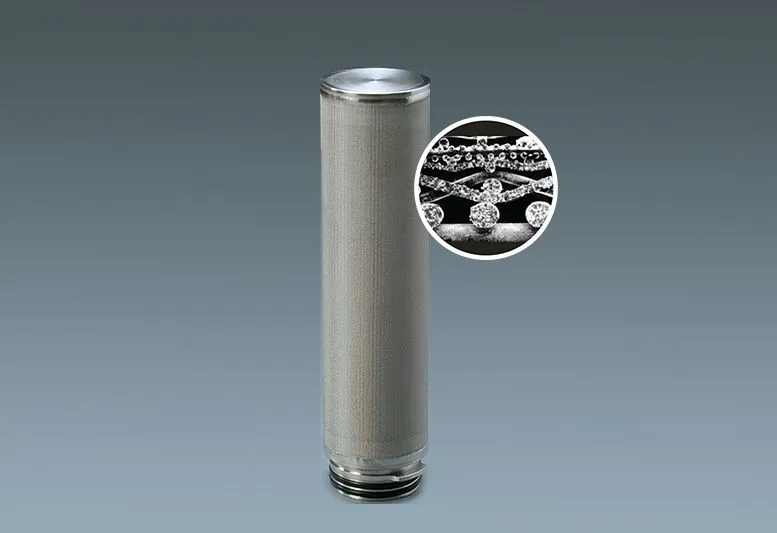
A woven filter element is made from single-layer or multi-layer plain, twill, or Dutch weave cloth, cut and formed into discs, tubes, cylinders, or pleated cartridges. Layers are typically held together by spot welding, edge welding, or mechanical crimping.
Advantages:
High open area (30–50% for plain weave)
Low pressure drop at a given micron rating
Easy to clean and backwash
Lower cost per unit area
Available from 5 µm to several millimetres
Limitations:
Wires can shift or deform under high differential pressure
Single-layer mesh offers limited dirt-holding capacity
Edge sealing is critical — poorly welded edges allow bypass
What Is a Sintered Wire Mesh Filter?
A sintered filter is built from multiple layers of woven mesh — typically a 5-layer structure: protective layer, filter layer, dispersion layer, support layer, and another protective layer. The stack is vacuum-sintered at 1100–1300°C, fusing the layers at every wire contact point into a rigid, monolithic plate.
Advantages:
Rigid, self-supporting structure — resists deformation at high differential pressure
No media migration — layers cannot separate or shift
High dirt-holding capacity — the 3D pore structure traps particles throughout the depth
Absolute ratings down to 1–2 µm
Repeatable cleaning — compatible with backwash, ultrasonic, and CIP/SIP cycles
Limitations:
Higher pressure drop than equivalent single-layer mesh
Higher unit cost
Not suitable for applications requiring high flexibility or conformability
Direct Comparison
| Property | Woven Mesh Filter | Sintered Mesh Filter |
|---|---|---|
| Construction | 1–2 layers, welded/crimped | 5 layers, vacuum sintered |
| Typical micron range | 5–1000 µm | 1–100 µm |
| Differential pressure tolerance | Moderate | High (100+ bar) |
| Dirt-holding capacity | Low–Moderate | High |
| Cleanability | Good | Excellent (repeatable) |
| Media migration risk | Present at edges | Eliminated |
| Relative cost | Lower | Higher |
| Best for | General filtration, strainers | Critical & high-pressure filtration |
Industry Application Guide
Pharmaceutical & Biotech
Sintered 316L elements are the standard for sterile filtration, fermentation air sparging, and CIP/SIP-compatible housings. Absolute ratings and no media migration are non-negotiable. Woven mesh is used mainly for pre-filtration and coarse retention.
Hydraulic & Fuel Systems
Reverse Dutch weave and sintered 316L elements dominate. Hydraulic filters must survive 200+ bar differential pressure without collapse — single-layer woven mesh cannot guarantee this.
Chemical Processing
Sintered elements handle aggressive media, high temperatures, and repeated chemical cleaning. Woven Dutch weave remains a cost-effective option for lower-pressure catalyst recovery and acid filtration.
Food & Beverage
Both types are used. Woven mesh suits sieving, dewatering, and coarse clarification. Sintered elements are preferred where sterility, repeated autoclaving, or product-contact integrity is critical.
Aerospace & Energy
Sintered 316L and nickel-based alloy elements are specified for fuel filtration, hydraulic control, and high-temperature gas filtration, where absolute ratings and structural reliability are essential.
Water Treatment
Woven 316 mesh dominates intake screening, RO pre-filtration, and backwashable strainers. Sintered elements are used in high-purity and high-temperature water loops.
Specification Checklist
Before requesting a quotation, define:
Micron rating — absolute or nominal?
Grade — 304, 316, or 316L (316L required for welded assemblies)
Construction — woven single-layer, multi-layer, or sintered
Operating pressure & differential pressure
Temperature and medium chemistry (chloride concentration, pH)
Cleaning method — backwash, ultrasonic, CIP/SIP, solvent
Dimensions & connection type — disc, tube, cartridge, basket
Why BOLI Wire Mesh
At BOLI Wire Mesh (www.boliwiremesh.com), we manufacture both woven and sintered stainless steel filter elements in 304, 316, and 316L — from single-layer Dutch weave discs to 5-layer sintered plates, pleated cartridges, and custom strainer baskets. Micron ratings from 1 µm to 300 µm, with bubble-point testing and EN 10204 3.1 material certification on every order.
Send your medium, pressure, temperature, and micron requirement — our engineers will recommend the right construction and return a specification within 24 hours.
Request a Quote →
FAQ
Which is better for high-pressure filtration — woven or sintered?
Sintered. The vacuum-fused multilayer structure resists deformation at differential pressures that would collapse or distort single-layer woven mesh.
Can sintered mesh filters be cleaned and reused?
Yes. Sintered 316L elements withstand repeated backwash, ultrasonic cleaning, and CIP/SIP cycles without media migration or loss of micron rating.
Is sintered mesh more expensive than woven mesh?
Unit cost is higher, but the longer service life, higher dirt-holding capacity, and repeatable cleaning often reduce total cost of ownership — especially in critical or high-pressure applications.
Do you supply both types with material certificates?
Yes. BOLI provides full traceability and EN 10204 3.1 certification for all woven and sintered stainless steel filter elements.
Recently Posted
-
How Stainless Steel Wire Mesh Filters Are Manufactured: From Wire Drawing to Industrial Application
October 10, 2026A stainless steel wire mesh filter is not simply “woven cloth cut to size.” The gap between a commodity mesh disc and a precision- Read More
 -
Stainless Steel Wire Mesh Weave Types: Plain, Twill & Dutch Weave Explained
October 10, 2026Stainless Steel Wire Mesh Weave Types: Plain, Twill & Dutch Weave ExplainedChoosing the right stainless steel wire mesh cloth Read More
 -
304/316/316L Stainless Steel Wire Mesh Filters & Strainers: A Complete Selection Guide for Engineers
October 10, 2026Specifying a stainless steel wire mesh filter or strainer is not a “one-grade-fits-all” decision. A 304 mesh that performs flawles Read More
 -
304 vs 316 vs 316L Stainless Steel Wire Mesh Cloth: Which Grade Should You Specify for Your Application?
October 10, 2026304 vs 316 vs 316L Stainless Steel Wire Mesh Cloth: Which Grade Should You Specify for Your Application?Choosing the wrong stainle Read More

Contact Us

Recommended Products
-
 Stainless Steel Perforated Strainer .oil Mesh Filter Air Filter Mesh StrainerUS$ 1 - 20MOQ: 10 Bags
 -
AISI 304 316 316L Plain Weave Woven Stainless Steel Wire Netting For Oil Filter Air Filter MakingUS$ 1.0 - 10.0MOQ: 10 Square Feet
-
Factory Manufacturer Woven Stainless Steel Wire Mesh Screen on Sale Wholesale SUS 304 316 Stainless Steel Wire Mesh High Strength AISI304 Stainless Steel Filter Screen Reverse Dutch Wire Mesh 4 8 20 100 120 200 250 Mesh Stainless Steel Woven Filter MeshUS$ 1.0 - 10.0MOQ: 10 Square Feet
-
Qualified Plain Weave Woven Stainless Steel Wire Mesh Screen on Sale Wholesale SUS 304 316 Stainless Steel Wire Mesh High Strength AISI304 Stainless Steel Filter Screen Reverse Dutch Wire Mesh 4 8 20 100 120 200 250 Mesh Stainless Steel Woven Filter MeshUS$ 1.0 - 10.0MOQ: 10 Square Feet
-
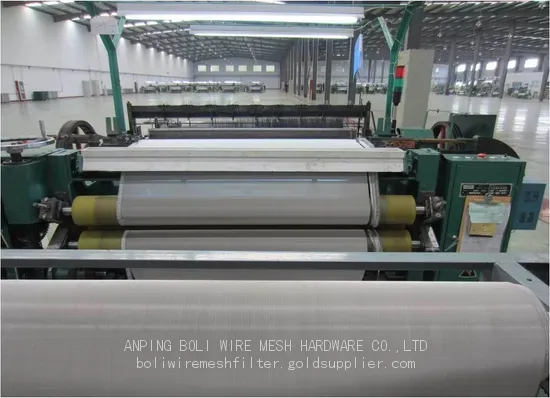
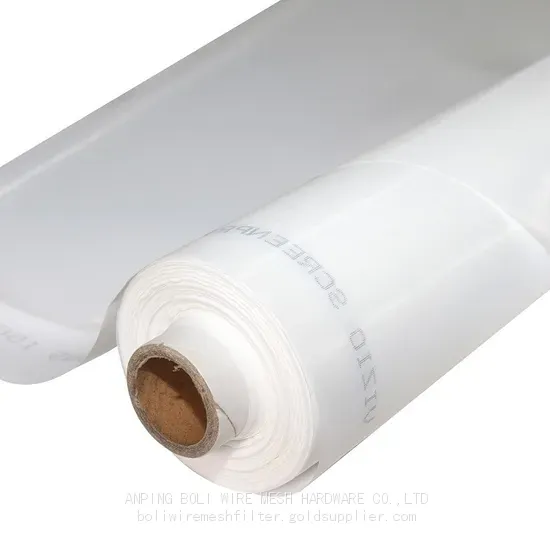
100% Food Grade Nylon Mesh White Color Nylon Mesh Cloth Food Grade 8um 10um 200um 60um 100um 600um Nylon MeshUS$ 1 - 20MOQ: 10 Square Meters
-
Nylon Filter Cloth Food Grade 8um 10um 200um 60um 100um 600um Nylon MeshUS$ 1 - 20MOQ: 10 Square Meters
-
SS304 316 Stainless Steel Perforated Filter Cartridge With Flange and Handle Accept OEM.factory SupplierUS$ 1 - 20MOQ: 10 Bags
-
Stainless Steel Wire Mesh Filter Cartridges Filter Cylinder Bucket Strainer Mesh for Beer FiltrationUS$ 1 - 20MOQ: 10 Bags
-
Wholesale SUS 304 316 Stainless Steel Wire Mesh High Strength AISI304 Stainless Steel Filter Screen Reverse Dutch Wire Mesh Stainless Steel Wire Cloth Mesh 4 8 20 100 120 200 250 300 325 635 2000 3500 Mesh Stainless Steel Woven Filter MeshUS$ 1.0 - 10.0MOQ: 10 Square Feet
-
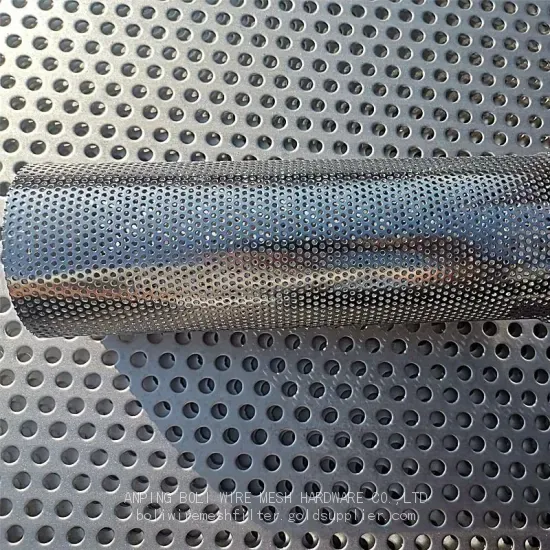
BOLI QUALITY Kitchen Accessories Sink Waste Filter Net Strainer Mesh Drain Strainer Drain Filter Strainer Basket Strainer BL021US$ 1 - 20MOQ: 10 Bags
-
Mesh Perforated Mesh Filter Bucket Strainer Basket/ Sintered Stainless Steel Wire Mesh Cone Filter/Perforated Wire Mesh Filter Bucket StrainerUS$ 1 - 20MOQ: 10 Bags
-
Nylon Filter Cloth 80-500 Mesh White Screen Filtration Food Grade Water Industrial ClothUS$ 1 - 20MOQ: 10 Square Meters
-
FDA Food Grade Nylon Filter Mesh/ 100 220 500 Micron Food Grade Nylon Filter Mesh ClothUS$ 1 - 20MOQ: 10 Square Meters
-
Polyester Steel Breaker Fabric Tear-Resistant Dipped Steel Cord Fabric Nylon Brass Coated Steel Cord for Making Tyre 2*0.30mm Belt/Tear-Resistant Dipped Steel Cord Fabric for Conveyor Belt Tear-Resistant Dipped Steel Cord Fabric for Conveyor BeltUS$ 1 - 200MOQ: 10 Kilometers
-
Tear-Resistant Dipped Steel Cord Fabric Nylon Brass Coated Steel Cord for Making Tyre 2*0.30mm Belt/Tear-Resistant Dipped Steel Cord Fabric for Conveyor Belt Tear-Resistant Dipped Steel Cord Fabric for Conveyor BeltUS$ 1 - 200MOQ: 10 Kilometers
-
BOLI Steel Cord Fabric for Conveyor Belt IW/TW/SW Belt Woven Steel Cable/STEEL Cord Fabric for Rubber Conveyor BeltsUS$ 1 - 200MOQ: 10 Kilometers
-
Top Quality Industrial Walkways Heavy Steel Bar Grating.Hot Dip Galvanized Bar Steel Grating .Top QualityUS$ 1 - 200MOQ: 10 Square Meters
-
BOLI -Stainles Steel Floor Steel Grating China GOLD Suppliers Dustproof Feature Upper and Lower Clip Steel Grating Used for Showcase GroundUS$ 1 - 200MOQ: 10 Square Meters
-
BBQ MESH Crimped Wire Mesh for Mining Crusher Screen Wholesale High Quality Stainless Steel Crimped Mesh Screen 304 316 316LUS$ 1 - 20MOQ: 10 Square Meters
-
Carbon Steel Strong Quality Crimped Wire Mesh for Mining Crusher Screen Wholesale High Quality Stainless Steel Crimped Mesh Screen 304 316 316LUS$ 1 - 20MOQ: 10 Square Meters