
 Business License
304 vs 316 vs 316L Stainless Steel Wire Mesh Cloth: Which Grade Should You Specify for Your Application?
304 vs 316 vs 316L Stainless Steel Wire Mesh Cloth: Which Grade Should You Specify for Your Application?
Choosing the wrong stainless steel grade for your wire mesh filter can cost you far more than the material price difference. A 304 mesh installed in a chloride-rich offshore filtration system may show pitting within months — while the right 316L specification could deliver a decade of uninterrupted service. This guide breaks down the real performance differences between 304, 316, and 316L stainless steel wire mesh cloth so you can specify with confidence.
Why Grade Selection Matters More Than You Think
The global stainless steel wire mesh market was valued at approximately US787millionin2024∗∗andisforecasttoreach∗∗US787millionin2024∗∗andisforecasttoreach∗∗US 1.1 billion by 2031, growing at a CAGR of 5.0%-40. Industrial filtration remains the largest application segment, with growing demand from chemical processing, pharmaceutical manufacturing, and food safety compliance driving adoption worldwide-39.
Yet despite this demand, many procurement teams still treat stainless steel grades as interchangeable — ordering “304 or 316, whichever is available.” That assumption leads to premature corrosion failures, unplanned downtime, and costly re-engineering.
The three most common grades for woven wire mesh cloth are 304, 316, and 316L. They share the same fundamental austenitic stainless steel structure, but small compositional differences produce dramatically different performance in aggressive environments.
304 Stainless Steel Wire Mesh Cloth
304 is the baseline grade — an “18-8” alloy containing approximately 18–20% chromium and 8–10.5% nickel-2. It offers good corrosion resistance in most general environments, including fresh water, mild acids, and typical atmospheric exposure.
Tensile strength: ~505 MPa-1
Melting point: 1400–1455°C-1
Carbon content: ≤0.06%
Best suited for: Food screening, architectural mesh panels, general-purpose filtration, and indoor or low-chloride environments.
Limitations: 304 performs poorly in chloride-rich conditions such as seawater, salt spray, or chemical processes involving chlorinated compounds. Its pitting resistance equivalent number (PREN) is approximately 18-55, well below the threshold needed for marine or high-chloride service.
316 Stainless Steel Wire Mesh Cloth
316 adds 2–3% molybdenum to the alloy, which significantly improves resistance to pitting and crevice corrosion — particularly in chloride-bearing environments-54.
Tensile strength: ~580 MPa-1
Nickel content: 10–14%-2
Melting point: 1370–1400°C-1
The molybdenum addition raises the PREN to approximately 24–26, making 316 the preferred choice for coastal installations, chemical processing equipment, and marine filtration systems-55.
Best suited for: Offshore platforms, chemical plant filters, desalination pre-filtration, and any application where chlorides are present.
316L Stainless Steel Wire Mesh Cloth
316L is chemically similar to 316 but with a maximum carbon content of 0.03% — roughly half that of standard 316-2. This “L” designation (low carbon) delivers a critical advantage: resistance to intergranular corrosion after welding.
When standard 316 is welded, chromium carbide precipitates form along grain boundaries in the heat-affected zone, depleting chromium locally and creating a corrosion pathway. 316L’s reduced carbon content prevents this sensitisation, making it essential for welded filter assemblies, pleated filter cartridges, and fabricated mesh components.
Tensile strength: ~580 MPa (comparable to 316)-1
Maximum carbon: 0.03%
PREN: 24–26
Best suited for: Welded filter elements, pharmaceutical filtration, food-contact equipment requiring sterilisation, and any mesh assembly that will be fabricated or joined.
Important note: 316L is not automatically “better” than 316 in all scenarios. For non-welded applications, standard 316 offers the same corrosion performance at a lower material cost.
Head-to-Head Comparison
| Property | 304 | 316 | 316L |
|---|---|---|---|
| Chromium (%) | 18–20 | 16–18 | 16–18 |
| Nickel (%) | 8–10.5 | 10–14 | 12–15 |
| Molybdenum (%) | — | 2–3 | 2–3 |
| Max Carbon (%) | 0.06 | 0.08 | 0.03 |
| Tensile Strength (MPa) | 505 | 580 | 580 |
| PREN | ~18 | 24–26 | 24–26 |
| Weldability (post-weld) | Good | Moderate | Excellent |
| Relative Cost | Lower | Higher | Highest |
Data compiled from published material specifications-1-2-55.
Weave Types and Mesh Specifications
Grade selection is only half the equation. The weave pattern and mesh count determine filtration precision and mechanical performance.
Plain weave is the most common structure, producing a square opening with uniform pore size. Available from 1 mesh to 635 mesh for square-opening wire cloth-11.
Twill weave uses a two-over-two-under pattern that allows finer mesh counts with larger wire diameters, improving mechanical strength at high mesh numbers.
Dutch weave (plain Dutch and twill Dutch) packs warp wires tightly together to achieve very fine filtration ratings. Dutch plain weave cloth ranges from 12×64 mesh to 80×700 mesh, while Dutch twill weave extends from 20×250 mesh to 400×2800 mesh-11. Dutch weave is ideal for high-pressure filtration where structural integrity is critical.
For precise micron-rated filtration, the key formula is:
Aperture (mm) = 25.4 / Mesh Count − Wire Diameter (mm)
This relationship means that two meshes with identical mesh counts but different wire diameters will have different filtration ratings — a frequent source of specification error.
How to Choose the Right Grade: A Practical Framework
Step 1 — Assess the chemical environment. Identify all media that will contact the mesh: process fluids, cleaning agents, atmospheric exposure. Chloride concentration is the single most important variable.
Step 2 — Apply the PREN threshold. If chloride concentration is below 200 ppm and pH exceeds 5, 304 is typically sufficient. Above this threshold — or when organic acids are present — specify 316 or 316L-55.
Step 3 — Determine whether welding is involved. If the mesh will be welded into filter assemblies, pleated cartridges, or support frames, 316L is the safer specification to prevent intergranular corrosion.
Step 4 — Evaluate lifecycle cost, not just unit price. The material cost differential between 304 and 316L is typically 15–25%. But a premature corrosion failure in a chemical plant filter can result in production downtime costing thousands of dollars per day.
Where Stainless Steel Wire Mesh Cloth Is Used
Stainless steel woven wire cloth serves a remarkably broad range of industries:
Chemical and petrochemical: Catalyst recovery screens, demister pads, acid-wash mesh, mud screens for drilling operations
Food and pharmaceutical: Sieving and grading screens, sterilisation-compatible filter media, juice clarification
Architecture: Facade cladding, railing infill, solar shading — where 316 is preferred for coastal buildings
Water treatment: Reverse osmosis pre-filtration, wastewater screening, desalination intake screens
Electronics and energy: EMI shielding, battery separator mesh, fuel cell components
The material’s combination of corrosion resistance, temperature stability (up to 800°C in oxidising atmospheres for 316L), and cleanability makes it the default specification in most hygienic and high-reliability environments-55.
Need Help Specifying Your Wire Mesh?
If you are sourcing 304, 316, or 316L stainless steel wire mesh cloth for a filtration, architectural, or industrial application, our technical team can help you match the right grade, weave pattern, and mesh count to your operating conditions. We supply plain weave, twill weave, and Dutch weave in mesh counts from 1 to 635, with full material certification to ASTM, ISO, and GB standards.
Request a quote or technical datasheet — tell us your medium, temperature, chloride exposure, and fabrication requirements, and we will recommend the optimal specification for your project.
Recently Posted
-
Sintered vs. Woven Stainless Steel Wire Mesh Filters: Which One Fits Your Process?
October 10, 2026Two filters can share the same 316L grade, the same 25 µm rating, and the same outer dimensions — yet behave completely differentl Read More
 -
How Stainless Steel Wire Mesh Filters Are Manufactured: From Wire Drawing to Industrial Application
October 10, 2026A stainless steel wire mesh filter is not simply “woven cloth cut to size.” The gap between a commodity mesh disc and a precision- Read More
 -
Stainless Steel Wire Mesh Weave Types: Plain, Twill & Dutch Weave Explained
October 10, 2026Stainless Steel Wire Mesh Weave Types: Plain, Twill & Dutch Weave ExplainedChoosing the right stainless steel wire mesh cloth Read More
 -
304/316/316L Stainless Steel Wire Mesh Filters & Strainers: A Complete Selection Guide for Engineers
October 10, 2026Specifying a stainless steel wire mesh filter or strainer is not a “one-grade-fits-all” decision. A 304 mesh that performs flawles Read More

Contact Us

Recommended Products
-
 Stainless Steel Perforated Strainer .oil Mesh Filter Air Filter Mesh StrainerUS$ 1 - 20MOQ: 10 Bags
 -
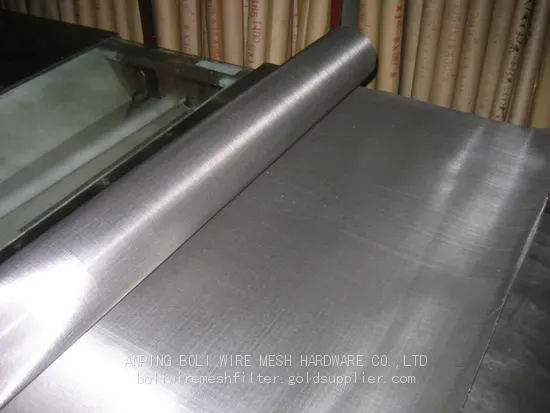
AISI 304 316 316L Plain Weave Woven Stainless Steel Wire Netting For Oil Filter Air Filter MakingUS$ 1.0 - 10.0MOQ: 10 Square Feet
-
Factory Manufacturer Woven Stainless Steel Wire Mesh Screen on Sale Wholesale SUS 304 316 Stainless Steel Wire Mesh High Strength AISI304 Stainless Steel Filter Screen Reverse Dutch Wire Mesh 4 8 20 100 120 200 250 Mesh Stainless Steel Woven Filter MeshUS$ 1.0 - 10.0MOQ: 10 Square Feet
-
Qualified Plain Weave Woven Stainless Steel Wire Mesh Screen on Sale Wholesale SUS 304 316 Stainless Steel Wire Mesh High Strength AISI304 Stainless Steel Filter Screen Reverse Dutch Wire Mesh 4 8 20 100 120 200 250 Mesh Stainless Steel Woven Filter MeshUS$ 1.0 - 10.0MOQ: 10 Square Feet
-
100% Food Grade Nylon Mesh White Color Nylon Mesh Cloth Food Grade 8um 10um 200um 60um 100um 600um Nylon MeshUS$ 1 - 20MOQ: 10 Square Meters
-
Nylon Filter Cloth Food Grade 8um 10um 200um 60um 100um 600um Nylon MeshUS$ 1 - 20MOQ: 10 Square Meters
-
SS304 316 Stainless Steel Perforated Filter Cartridge With Flange and Handle Accept OEM.factory SupplierUS$ 1 - 20MOQ: 10 Bags
-
Stainless Steel Wire Mesh Filter Cartridges Filter Cylinder Bucket Strainer Mesh for Beer FiltrationUS$ 1 - 20MOQ: 10 Bags
-
Wholesale SUS 304 316 Stainless Steel Wire Mesh High Strength AISI304 Stainless Steel Filter Screen Reverse Dutch Wire Mesh Stainless Steel Wire Cloth Mesh 4 8 20 100 120 200 250 300 325 635 2000 3500 Mesh Stainless Steel Woven Filter MeshUS$ 1.0 - 10.0MOQ: 10 Square Feet
-
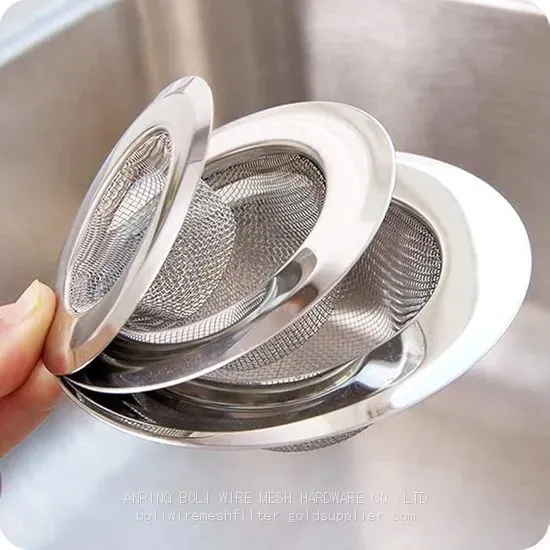
BOLI QUALITY Kitchen Accessories Sink Waste Filter Net Strainer Mesh Drain Strainer Drain Filter Strainer Basket Strainer BL021US$ 1 - 20MOQ: 10 Bags
-
Mesh Perforated Mesh Filter Bucket Strainer Basket/ Sintered Stainless Steel Wire Mesh Cone Filter/Perforated Wire Mesh Filter Bucket StrainerUS$ 1 - 20MOQ: 10 Bags
-
Nylon Filter Cloth 80-500 Mesh White Screen Filtration Food Grade Water Industrial ClothUS$ 1 - 20MOQ: 10 Square Meters
-
FDA Food Grade Nylon Filter Mesh/ 100 220 500 Micron Food Grade Nylon Filter Mesh ClothUS$ 1 - 20MOQ: 10 Square Meters
-
Polyester Steel Breaker Fabric Tear-Resistant Dipped Steel Cord Fabric Nylon Brass Coated Steel Cord for Making Tyre 2*0.30mm Belt/Tear-Resistant Dipped Steel Cord Fabric for Conveyor Belt Tear-Resistant Dipped Steel Cord Fabric for Conveyor BeltUS$ 1 - 200MOQ: 10 Kilometers
-
Tear-Resistant Dipped Steel Cord Fabric Nylon Brass Coated Steel Cord for Making Tyre 2*0.30mm Belt/Tear-Resistant Dipped Steel Cord Fabric for Conveyor Belt Tear-Resistant Dipped Steel Cord Fabric for Conveyor BeltUS$ 1 - 200MOQ: 10 Kilometers
-
BOLI Steel Cord Fabric for Conveyor Belt IW/TW/SW Belt Woven Steel Cable/STEEL Cord Fabric for Rubber Conveyor BeltsUS$ 1 - 200MOQ: 10 Kilometers
-
Top Quality Industrial Walkways Heavy Steel Bar Grating.Hot Dip Galvanized Bar Steel Grating .Top QualityUS$ 1 - 200MOQ: 10 Square Meters
-
BOLI -Stainles Steel Floor Steel Grating China GOLD Suppliers Dustproof Feature Upper and Lower Clip Steel Grating Used for Showcase GroundUS$ 1 - 200MOQ: 10 Square Meters
-
BBQ MESH Crimped Wire Mesh for Mining Crusher Screen Wholesale High Quality Stainless Steel Crimped Mesh Screen 304 316 316LUS$ 1 - 20MOQ: 10 Square Meters
-
Carbon Steel Strong Quality Crimped Wire Mesh for Mining Crusher Screen Wholesale High Quality Stainless Steel Crimped Mesh Screen 304 316 316LUS$ 1 - 20MOQ: 10 Square Meters